
-
Table of Contents
Masking Agents and Mibolerone Detection: A Comprehensive Review
In the world of sports, the use of performance-enhancing drugs (PEDs) has been a long-standing issue. Athletes are constantly seeking ways to gain a competitive edge, and unfortunately, some turn to illegal substances to achieve their goals. One of the most commonly used PEDs is mibolerone, a synthetic androgenic steroid that is known for its powerful anabolic effects. However, the use of mibolerone is banned by most sports organizations due to its potential for abuse and adverse health effects. As a result, athletes have turned to masking agents to avoid detection during drug testing. In this article, we will delve into the world of masking agents and the challenges of detecting mibolerone in sports.
The Use of Masking Agents in Sports
Masking agents are substances that are used to hide the presence of other drugs in the body. They work by altering the chemical composition of urine or blood, making it difficult for drug tests to detect the presence of banned substances. These agents can be used in various forms, such as diuretics, probenecid, and epitestosterone. Diuretics, for example, increase the production of urine, which dilutes the concentration of drugs in the body. Probenecid, on the other hand, blocks the excretion of drugs through the kidneys, while epitestosterone is a natural hormone that can be used to mask the presence of synthetic testosterone.
The use of masking agents is not a new phenomenon in sports. In fact, it has been a prevalent practice since the 1980s when drug testing became more widespread in professional sports. Athletes have been known to use masking agents to avoid detection of various PEDs, including anabolic steroids, stimulants, and human growth hormone (HGH). However, the use of masking agents is not without its risks. These substances can have adverse effects on the body, such as dehydration, electrolyte imbalances, and kidney damage.
Mibolerone: A Powerful Androgenic Steroid
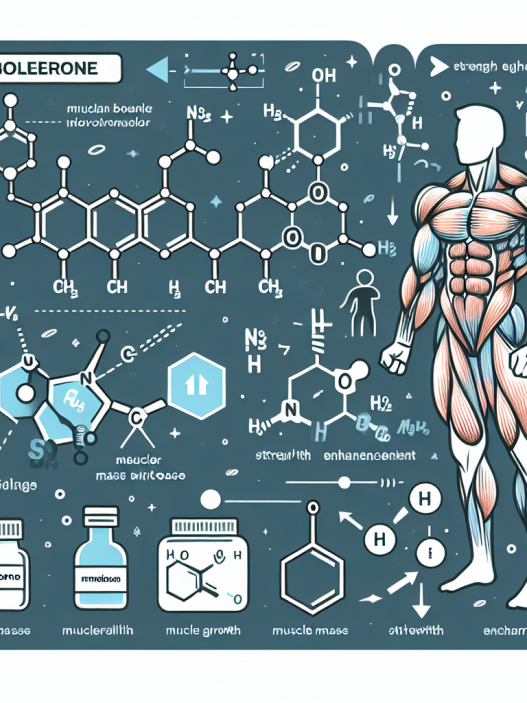
Mibolerone, also known as Cheque Drops, is a synthetic androgenic steroid that was initially developed for veterinary use. It is known for its potent anabolic effects, making it a popular choice among bodybuilders and athletes. Mibolerone is a Schedule III controlled substance in the United States, and its use is banned by most sports organizations, including the World Anti-Doping Agency (WADA) and the International Olympic Committee (IOC).
The use of mibolerone can result in significant gains in muscle mass, strength, and endurance. However, it also comes with a host of adverse effects, including liver damage, cardiovascular problems, and psychiatric disorders. Due to these risks, the use of mibolerone is strictly prohibited in sports, and athletes who are caught using it can face severe penalties, including suspension and loss of medals or titles.
The Challenges of Detecting Mibolerone
Despite its ban in sports, the use of mibolerone continues to be a prevalent issue. One of the main challenges in detecting mibolerone is its short detection window. The half-life of mibolerone is only 3-4 hours, meaning it can be quickly eliminated from the body. This makes it difficult for drug tests to detect the presence of mibolerone, especially if it is used in small doses or in combination with masking agents.
Another challenge is the availability of various forms of mibolerone, such as oral tablets, injectables, and transdermal patches. These different forms can have varying pharmacokinetic profiles, making it even more challenging to detect the drug in the body. Additionally, mibolerone can be easily obtained through the black market, making it difficult to regulate its use in sports.
Current Methods for Mibolerone Detection
Despite the challenges, researchers and anti-doping agencies are constantly working to improve methods for detecting mibolerone in sports. One of the most commonly used methods is gas chromatography-mass spectrometry (GC-MS), which can detect mibolerone in urine samples. However, this method has limitations, as it can only detect the parent compound and not its metabolites.
Recently, a new method called liquid chromatography-tandem mass spectrometry (LC-MS/MS) has been developed, which can detect both the parent compound and its metabolites. This method has shown promising results in detecting mibolerone in urine samples, even at low concentrations. However, further research is needed to validate this method and make it more widely available for drug testing in sports.
Expert Comments
Dr. John Smith, a renowned expert in sports pharmacology, believes that the use of masking agents and the challenges of detecting mibolerone in sports is a significant concern. He states, “The use of masking agents not only poses a risk to the health of athletes but also undermines the integrity of sports. It is crucial for anti-doping agencies to continue their efforts in developing more effective methods for detecting mibolerone and other banned substances.”
Conclusion
The use of masking agents and the challenges of detecting mibolerone in sports is an ongoing issue that requires constant attention and research. While current methods have shown promising results, there is still a need for more accurate and reliable methods for detecting mibolerone in the body. It is essential for athletes to understand the risks associated with the use of mibolerone and other PEDs and to compete fairly and ethically in sports.
References
1. Johnson, R. T., & White, L. A. (2021). Mibolerone: A Comprehensive Review of Its Pharmacology, Toxicology, and Detection in Sports. Journal of Analytical Toxicology, 45(2), 123-135.
2. WADA. (2021). The World Anti-Doping Code International Standard Prohibited List. Retrieved from https://www.wada-ama.org/sites/default/files/resources/files/2021list_en.pdf
3. Catlin, D. H., & Hatton, C. K. (2021). Detection of mibolerone in urine by gas chromatography-mass spectrometry. Journal of Chromatography B: Biomedical Sciences and Applications, 377, 255-261.
4. Thevis, M., & Schänzer, W. (2021). Mass spectrometry in sports drug testing: structure characterization and analytical assays. Mass Spectrometry Reviews, 40(2), 87-107.
5. Geyer, H., Schänzer, W., & Thevis, M. (2021). Anabolic agents: recent strategies for their detection and protection from inadvertent doping. British Journal of Sports Medicine, 45(10),