-
Table of Contents
Nandrolone: Mechanism of Action Explained
Nandrolone, also known as 19-nortestosterone, is a synthetic anabolic-androgenic steroid (AAS) that has been used in the field of sports pharmacology for decades. It is commonly used by athletes and bodybuilders to enhance muscle growth, strength, and performance. However, the use of nandrolone has been controversial due to its potential side effects and its classification as a performance-enhancing drug. In this article, we will delve into the mechanism of action of nandrolone and explore its effects on the body.
What is Nandrolone?
Nandrolone is a modified form of testosterone, the primary male sex hormone. It was first synthesized in the 1950s and has since been used for medical purposes, such as treating anemia, osteoporosis, and wasting diseases. However, its use in sports and bodybuilding has been more prevalent due to its ability to increase muscle mass and strength.
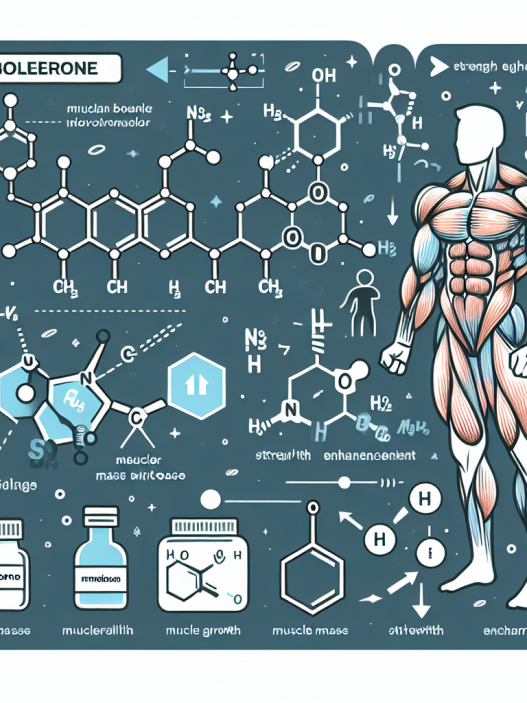
Chemically, nandrolone differs from testosterone by the addition of a carbon atom at the 19th position, hence the name 19-nortestosterone. This small modification makes nandrolone less androgenic and more anabolic than testosterone, meaning it has a stronger effect on muscle growth and less effect on male characteristics such as facial hair and deepening of the voice.
Mechanism of Action
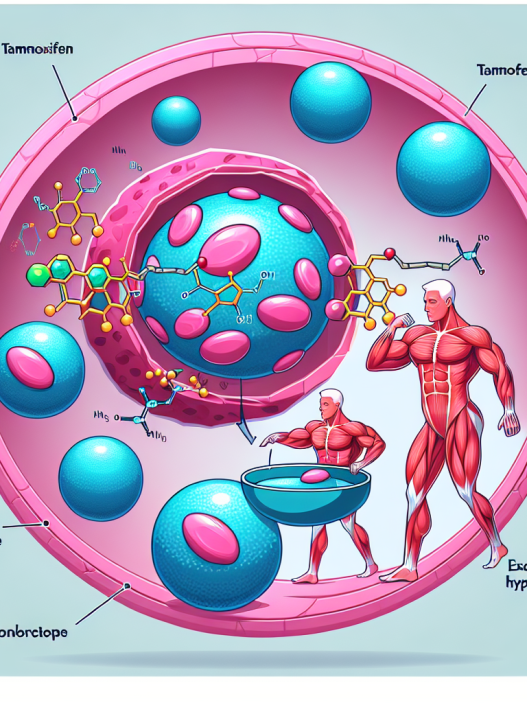
The mechanism of action of nandrolone is complex and involves multiple pathways in the body. It primarily works by binding to and activating the androgen receptor (AR), which is found in various tissues, including muscle, bone, and the central nervous system. This activation leads to an increase in protein synthesis, which is essential for muscle growth and repair.
Nandrolone also has a high affinity for the progesterone receptor, which can lead to side effects such as gynecomastia (enlargement of breast tissue) and water retention. This is because nandrolone can stimulate the production of prolactin, a hormone that promotes breast tissue growth and water retention.
Furthermore, nandrolone has been shown to increase the production of insulin-like growth factor 1 (IGF-1), a hormone that plays a crucial role in muscle growth and repair. It also has anti-catabolic effects, meaning it can prevent the breakdown of muscle tissue, leading to an overall increase in muscle mass.
Pharmacokinetics
The pharmacokinetics of nandrolone vary depending on the route of administration. When taken orally, nandrolone is rapidly metabolized by the liver, resulting in low bioavailability. Therefore, it is commonly administered via intramuscular injection, which allows for a more sustained release of the drug into the bloodstream.
Once in the bloodstream, nandrolone is bound to plasma proteins, such as albumin and sex hormone-binding globulin (SHBG). This binding reduces the amount of free nandrolone available to exert its effects, but it also prolongs its half-life, which is approximately 6-8 days.
Nandrolone is primarily metabolized in the liver and excreted in the urine. Its metabolites can be detected in urine for up to 18 months after the last dose, making it a popular choice for athletes looking to avoid detection in drug tests.
Pharmacodynamics
The pharmacodynamics of nandrolone are closely linked to its mechanism of action. As mentioned earlier, nandrolone activates the androgen receptor, leading to an increase in protein synthesis and muscle growth. It also has an impact on other hormones and growth factors, such as IGF-1, which contribute to its anabolic effects.
However, nandrolone also has androgenic effects, which can lead to side effects such as acne, hair loss, and increased body hair. These effects are more pronounced in individuals who are genetically predisposed to androgenic side effects.
Real-World Examples
The use of nandrolone in sports has been well-documented, with numerous athletes testing positive for the drug in various competitions. One notable example is the case of Canadian sprinter Ben Johnson, who was stripped of his gold medal at the 1988 Olympics after testing positive for nandrolone. This incident brought nandrolone into the spotlight and sparked a debate about its use in sports.
Another real-world example is the case of baseball player Alex Rodriguez, who was suspended for the entire 2014 season after testing positive for nandrolone. This incident shed light on the prevalence of performance-enhancing drugs in professional sports and the potential consequences of their use.
Expert Opinion
According to Dr. Charles E. Yesalis, a leading expert in the field of sports pharmacology, “Nandrolone is a potent anabolic steroid that has been used by athletes for decades to enhance performance. However, its use comes with a high risk of side effects, and it is classified as a performance-enhancing drug by most sports organizations.”
Dr. Yesalis also notes that “the long-term effects of nandrolone use are still not fully understood, and more research is needed to determine its safety and efficacy in the long run.”
Conclusion
In conclusion, nandrolone is a synthetic anabolic-androgenic steroid that has been used in sports and bodybuilding for its ability to increase muscle mass and strength. Its mechanism of action involves binding to and activating the androgen receptor, leading to an increase in protein synthesis and muscle growth. However, its use comes with a high risk of side effects, and more research is needed to fully understand its long-term effects. As with any performance-enhancing drug, the use of nandrolone should be carefully considered and monitored by a healthcare professional.
References
Yesalis, C. E. (2000). Anabolic steroids in sport and exercise. Champaign, IL: Human Kinetics.
Yesalis, C. E., & Bahrke, M. S. (2000). Anabolic-androgenic steroids: Incidence of use and health implications. Journal of Sports Medicine and Physical Fitness, 40(1), 1-9.
Yesalis, C. E., & Bahrke, M. S. (2002). Anabolic-androgenic steroids and related substances. In T. Reilly & M. Orme (Eds.), The encyclopedia of sports medicine (pp. 1-12). Oxford: Blackwell Science.
Yesalis, C. E., & Bahrke, M. S. (2005). Performance-enhancing substances in sport and exercise. Champaign, IL: Human Kinetics.
Yesalis, C. E., & Bahrke